1 volumes · 7 editions
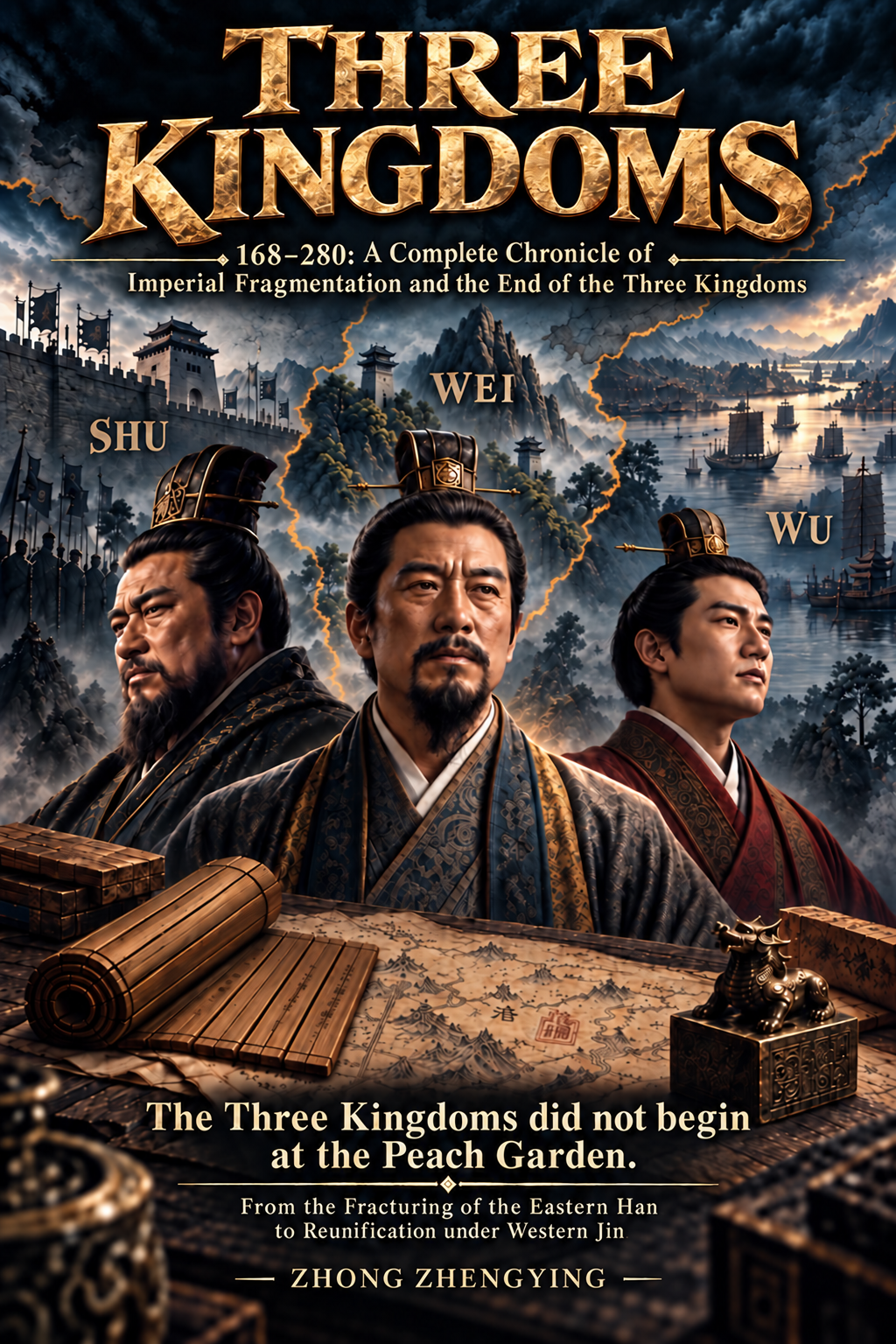
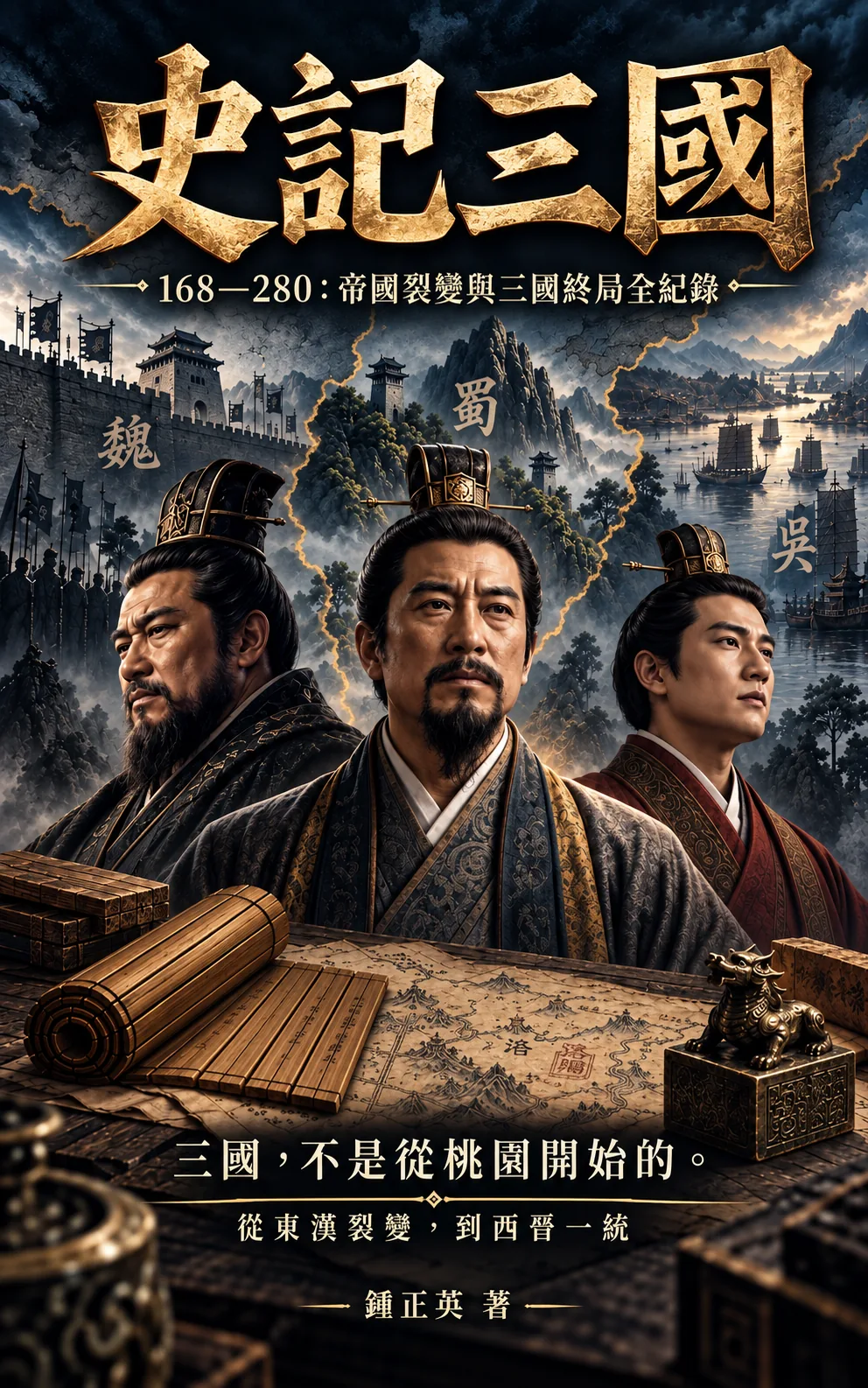
Three Kingdoms, 168–280
A chronological history, from the late Han court to Jin reunification, 168–280.
Explore Series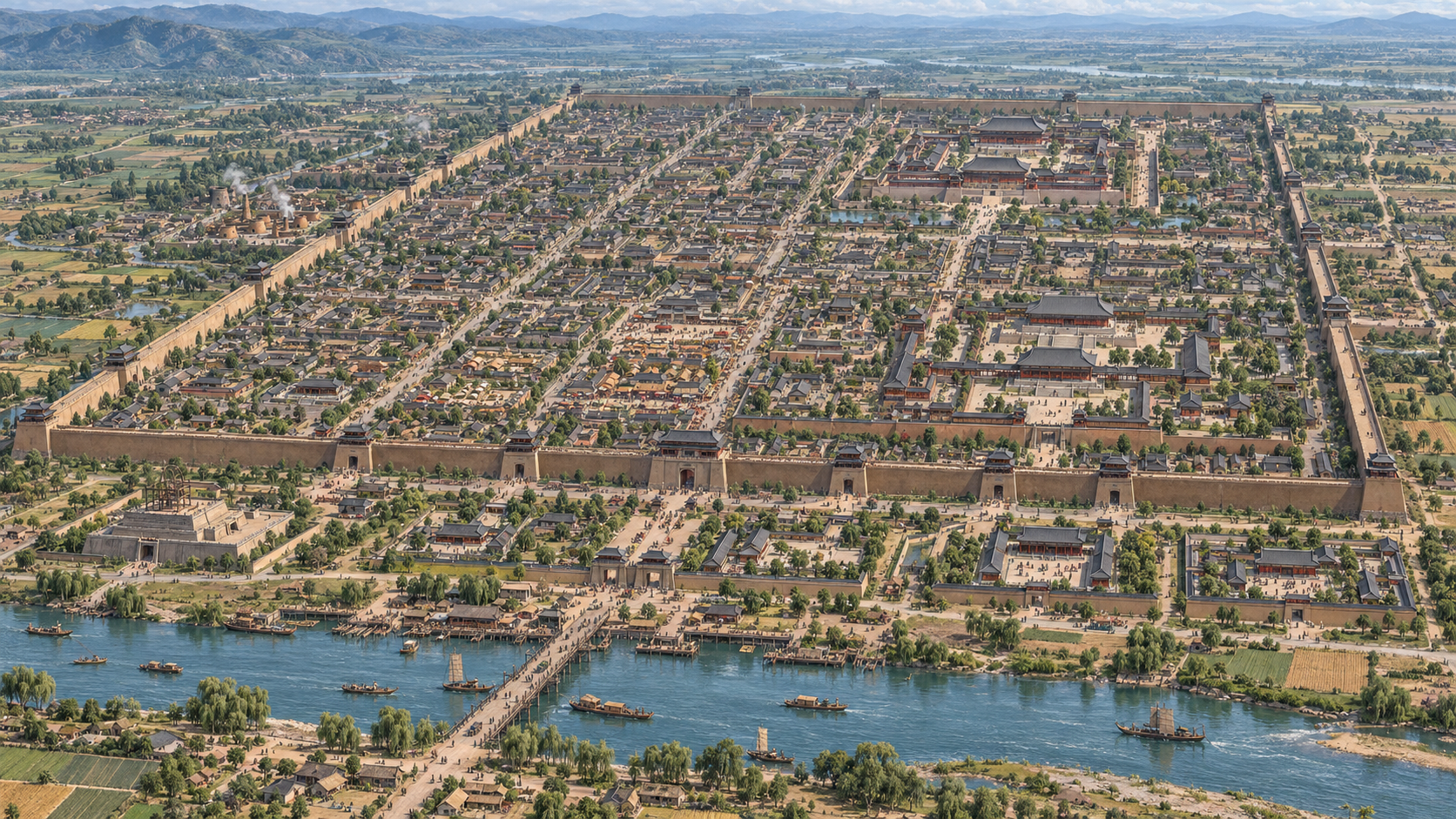
The Three Kingdoms did not begin in the Peach Garden.
How did one empire become three rival kingdoms? From the Eastern Han court to Western Jin reunification, follow the choices that reshaped an age.
Scene: around 180 CE. An artistic reconstruction, not a photograph of an archaeological reconstruction.
1 volumes · 7 editions
A chronological history, from the late Han court to Jin reunification, 168–280.
Explore Series4 volumes · 13 editions
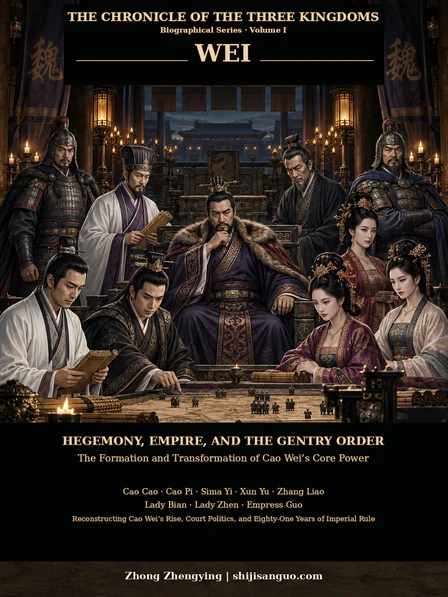
Four volumes: Wei, Shu, Wu and the rival lords. Explore the people, choices and relationships of the era.
Explore Series01 / THE STORY
This story does not begin simply with the arrival of familiar heroes. It opens at the Eastern Han court in 168: the emperor is young, and those inside and outside the palace gates compete for the power to turn words into orders.
Over the next century and more, the court, provinces, families and armies repeatedly realign. Each decision belongs not just to a hero, but to the movement of an age.
Follow the Journey, 168–280 ↗See how court power and fractures in institutions began to unsettle the empire.
Beyond victory and defeat, see how people confronted the situations before them.
Reunification is not an abrupt ending, but the outcome of a century of change.
02 / THE ERA
Explore eighteen turning points from the Eastern Han court to Western Jin's conquest of Wu. This is a guide to historical events, not a chapter list.
In the year Emperor Ling took the throne, Dou Wu and Chen Fan planned to eliminate the eunuchs. Their plan failed and both died; the court's power struggle had moved beyond debate.
Source: Hou Hanshu, 69Zhang Jue's followers rose in rebellion, and the court mobilized troops. Provincial armed groups and military figures increasingly shaped the political situation.
Source: Hou Hanshu, 71After Emperor Ling's death, the conflict between He Jin and the eunuchs threw the capital into upheaval. Dong Zhuo entered Luoyang with troops, transforming the court once more.
Source: Hou Hanshu, 72Armies east of the passes rose against Dong Zhuo, who took the emperor west to Chang'an. Relations between the center and provinces would not readily return to their former state.
Source: Sanguozhi, 1Cao Cao brought Emperor Xian to Xu. The emperor, imperial orders and military power were thereafter intertwined in one political center.
Source: Sanguozhi, 1Cao Cao and Yuan Shao confronted one another at Guandu, where Cao's army eventually prevailed. The balance of power in the north continued to change through the years that followed.
Source: Sanguozhi, 1As Cao Cao advanced south, Sun Quan sent Zhou Yu and Cheng Pu to fight alongside Liu Bei. They repelled Cao's forces at Red Cliffs. Cao returned north, but competition in the Yangtze region continued.
Source: Sanguozhi, 47Huang Zhong defeated Xiahou Yuan at Mount Dingjun. In the same year, Liu Bei became King of Hanzhong, highlighting the political and military importance of Yi Province and Hanzhong.
Source: Sanguozhi, 36Emperor Xian abdicated in favor of Cao Pi, ending the Eastern Han. The change of dynasty did not end warfare across the regions.
Source: Sanguozhi, 2Liu Bei assumed the imperial title and named his state Han, known to history as Shu Han. His claim to continue the Han dynasty now had its own court.
Source: Sanguozhi, 32Liu Bei campaigned east against Sun Quan, but his army suffered defeat near Yiling. Relations between Shu Han and Sun Wu underwent another major conflict.
Source: Sanguozhi, 32Sun Quan formally assumed the imperial title. Wei, Shu Han and Wu now each had an emperor; their borders were not thereby fixed.
Source: Sanguozhi, 47Zhuge Liang, Chancellor of Shu Han, died during a northern expedition. His successors took up the state's government and military responsibilities.
Source: Sanguozhi, 33Sima Yi rose while the Wei emperor was visiting the Gaoping tombs. Cao Shuang and his associates were ultimately executed, changing the balance of power at the Wei court.
Source: Jinshu, 1Wei's forces entered Shu, and Liu Shan surrendered. The three-way division first ended in the southwest.
Source: Sanguozhi, 33The Wei emperor abdicated and Sima Yan took the throne. Wei's dynastic name disappeared, while Sun Wu remained south of the Yangtze.
Source: Jinshu, 3The Jin court launched a multi-front offensive, with land forces and river fleets advancing together. Reunification required military campaigns; it had not been achieved by abdication alone.
Source: Jinshu, 3Jin's forces reached Jianye, and Sun Hao, ruler of Wu, surrendered. The division that had followed the rise of Wei, Shu and Wu came to an end.
Source: Jinshu, 303 / HOW IT IS WRITTEN
Shiji Sanguo uses existing research into the official histories as its framework. Conversations, actions, waiting, documents in transit and daily life are reconstructed without changing the people, chronology, limits of knowledge, causes or outcomes.
Reconstructed passages are not surviving verbatim records. Consult the book's notes for differences among sources and the main areas of reconstruction. This website does not present literary scenes as quotable primary-source text.
04 / BEFORE YOU READ
Discover the Story, Then Choose a Platform
Read Chapter One ↗The website offers Chapter One of the Traditional Chinese edition, including six notes. Refer to each platform's product page for the complete book.
Selected from the author's first chapter; this does not claim that every chapter has completed individual QA.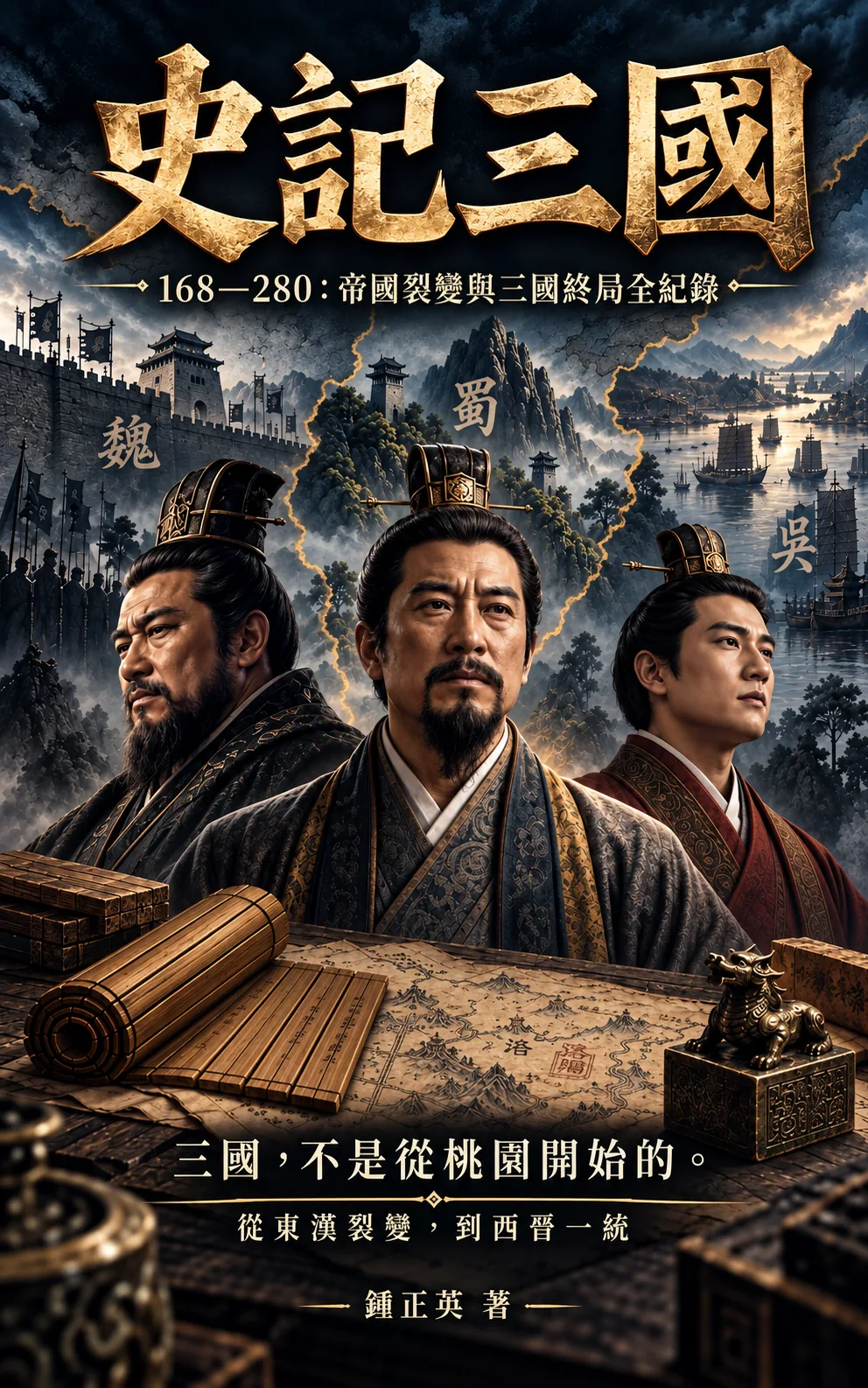
05 / WHERE TO READ
The historical narrative and biography series each have book descriptions and verified edition records. Open a sample or a confirmed reading platform from the catalog. Books without a confirmed purchase link retain their descriptions.
View All Books and EditionsThis website does not collect payments or ask for account passwords. Purchases and reading services are provided by the linked platforms.